FAQ Optimization: How to Write FAQs That Get Quoted by Google and AI
Learn how to find real customer questions, write short direct answers, structure FAQ sections and add schema so Google and AI tools can quote your content.
Structured data helps search engines and AI tools understand your pages. This beginner’s guide explains schema, the types worth using, and how to add and test it.
Schema markup is a standard vocabulary (from schema.org) that you add to a page so machines can understand it exactly. It tells search engines, “this is a business, this is its phone number, this is an article, this is a question and its answer.”
Structured data removes guesswork. It can make you eligible for rich results in Google, and it gives AI tools cleaner facts about your brand. It is not a ranking guarantee, but it supports clarity.
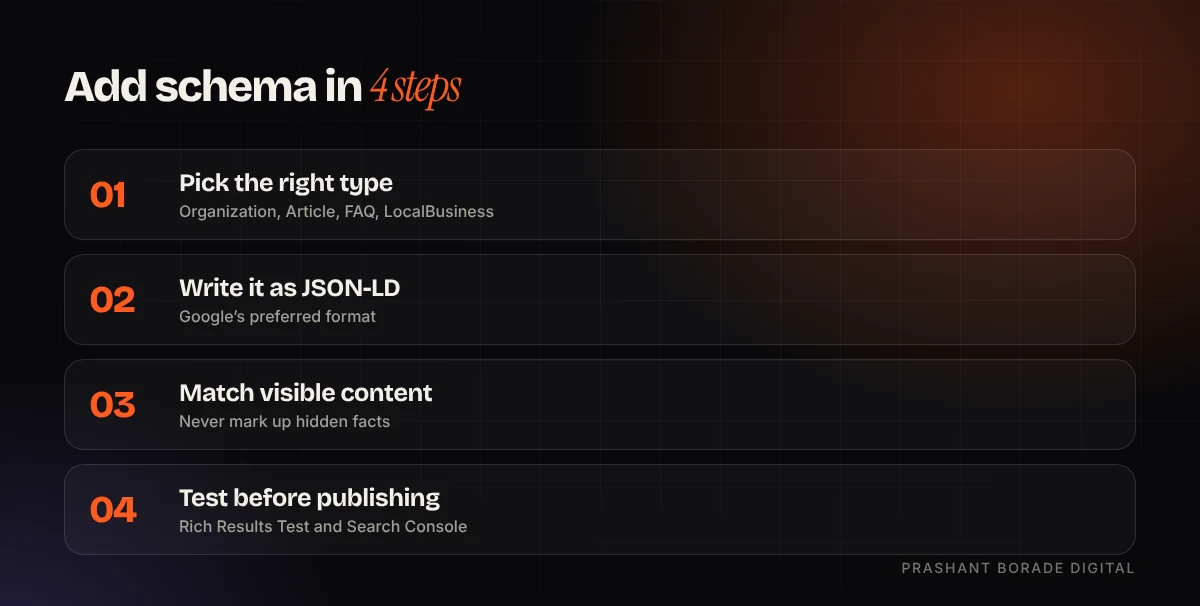
Schema is usually added as JSON-LD inside a script tag:
<script type="application/ld+json">
{
  "@context": "https://schema.org",
  "@type": "Organization",
  "name": "Your Brand",
  "url": "https://www.example.com",
  "email": "hello@example.com"
}
</script>Use Google’s Rich Results Test and the Schema Markup Validator, then monitor Search Console’s enhancement reports for errors. Our AEO services include a full structured data audit.
Google does not treat it as a direct ranking factor, but it helps search engines understand content and can enable rich results.
JSON-LD is the format Google recommends because it is easy to add and maintain.
Yes, many CMS plugins can add basic schema. For custom needs, ask a developer or SEO specialist.
Get an AEO review of your content, schema and FAQ structure.
Explore AEO services